First Cousin Marriage and the “Yuck” Factor
What do the following persons have in common?
- Charles Darwin
- Albert Einstein
- Saddam Hussein
- Jesse James
- Jerry Lee Lewis
- Edgar Allan Poe
- H.G. Wells
Answer: Each married his first cousin.[i]
Recently, CNN reported on a Tennessee State bill which prohibited marriage between first cousins.
Bill sponsor Democratic Rep. Darren Jernigan explained the bill would delete language in the law enacted by the state’s General Assembly in 1829, substituting “nor the child of a grandparent” with “nor the lineal descendant of a grandparent,” effectively prohibiting marriage between first cousins.
In 1960, Tennessee’s attorney general wrote an opinion, which determined the statute from 1829 did not prohibit marriage between cousins, Jernigan said.[ii]
The bill passed overwhelmingly, with only two legislators voting against it. The objection of one legislator to the bill’s passage inspired Jesse Dollemore, one of my favourite political pundits, to give oxygen to the American idea that marriage between first cousins is “creepy.”[iii] It offends their social mores.
The accepted view, at least in the United States, seems to be that such marriages are incestuous and will, more likely than not, result in mental and physical deformities of the offspring. The online comments and jokes responding to Dollemore’s post reinforced the repulsion (the “yuck” factor) that many Americans have for such unions.
The Habsburgs Make the Case against Cousin Marriage
European royalty certainly showcased the negative effects of inbreeding. A well-known example is the family tree of the German-Austrian Habsburgs who consolidated their power across Europe by making strategic marriages, most often with close blood relatives.
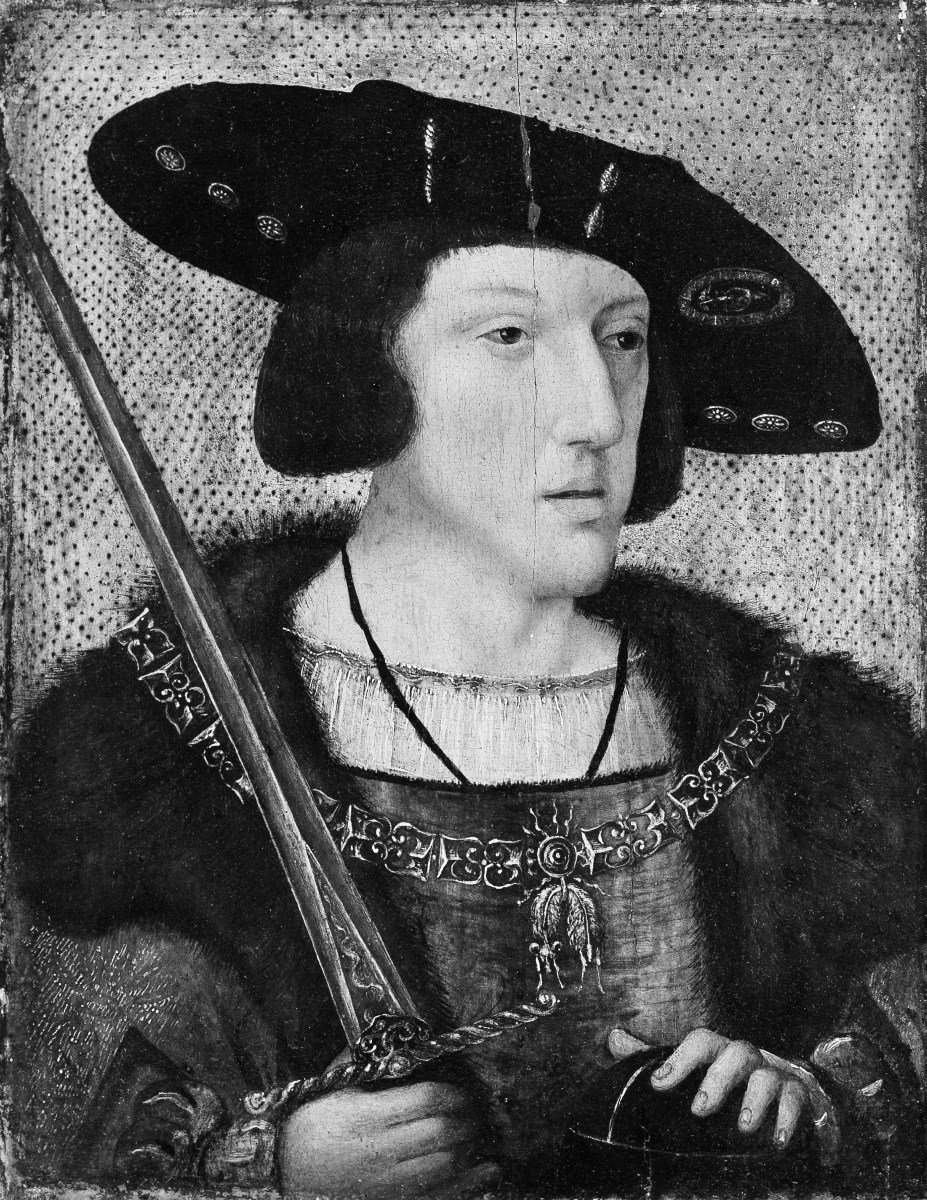
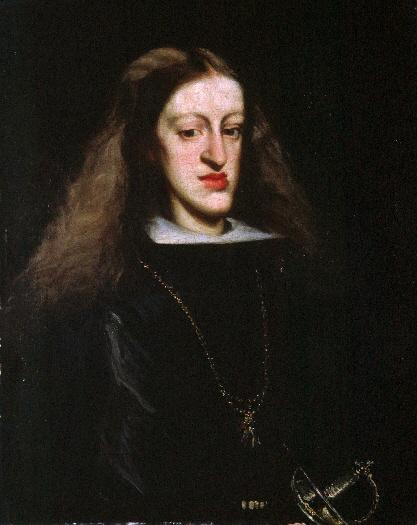
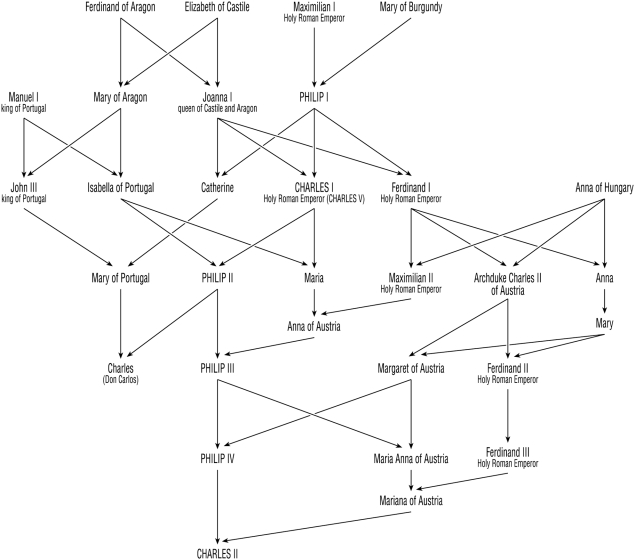
Charles II of Spain’s family tree resembles a circle, rather than the normal inverted triangle. I find it completely confusing. Marriages were more often between close family members than not. Charles’ parents were themselves uncle and niece.
Maximilian I, Holy Roman Emperor, (at the top of the tree) lived from 1459-1519. He is believed to have been the first Habsburg to have the signature jutting jaw and he preceded the family’s practice of close kin marriages.
Intermarriage between Maximilian I’s descendants led to extreme facial deformities—mandibular prognathism or what is now known as the “Habsburg Jaw”— and maxillary deficiency (sunken midface). Genetic research indicates these deformities were likely caused by the mutation of recessive genes.
Charles I (1500-1558, King of Spain 1516-56; Holy Roman Emperor 1519-58) “possessed ‘a long, cadaverous face and a lopsided mouth (which drops open when he is not on his guard).’”[vii] So wrote Italian diplomat Antonio di Beatis in 1517.
Charles II (1661–1700, King of Spain 1665-1700) married twice but had no heirs. Geneticists have found that “inbreeding diminished Habsburg offspring’s chances of survival by as much as 18 percent.” In addition to his jutting jaw, Charles II had epilepsy and an overlarge tongue which inhibited his ability to speak clearly or eat.[viii]
Four years before Charles’ death, British envoy Alexander Stanhope described the king’s Hapsburg [sic] features in a letter to the Duke of Shrewsbury, writing, “He has a ravenous stomach, and swallows all he eats whole, for his nether jaw stands so much out, that his two rows of teeth cannot meet.[ix]
The warning signs of inbreeding came too late. With Charles II’s death, the Habsburg dynasty in Spain became extinct.
First Cousin Marriages Today
In a 2011 published report of the Geneva International Consanguinity Workshop, consanguineous marriage “is generally defined as a union between two individuals related as second cousins or closer.” [x]
Marriage between close family members remains an acceptable trope in the United States, especially when referencing a mythical “backwards hillbilly” culture. It conjures up the picture of inbred rednecks—uneducated, uncivilized, and deeply stupid people living in poverty.[xi] It surprised me to learn that the United States is one of only a few countries on this planet where marriage between first cousins is now either illegal or restricted in the majority of states.
Cousin marriage is legal in Canada although the number of such marriages has declined steadily since the mid-nineteenth century and numbers are currently very low. It remains popular in North Africa, the Middle East and West Asia, “a transverse belt that runs from Pakistan and Afghanistan in the east to Morocco in the west, and in South India….”[xii]
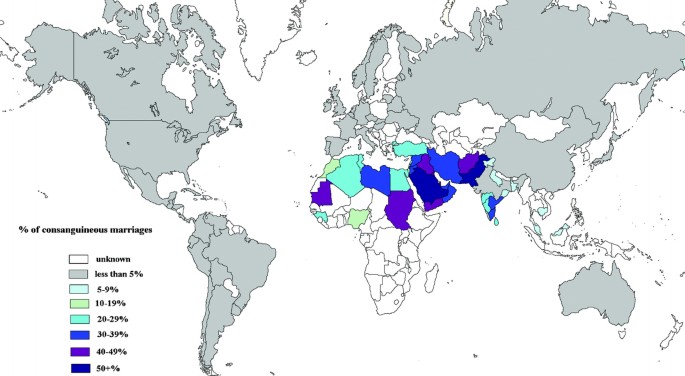
Diane P. Paul and Hamish G. Spencer in their article “It’s Ok, We’re Not Cousins by Blood: The Cousin Marriage Controversy in Historical Perspective”[xiv]looked at the United States where prohibitions on cousin marriage date to the Civil War, beginning with Kansas in 1858. Cousin marriage in the States was also prejudicially associated with immigrants, the rural poor, and primitive societies.
When considering the genetic risks to the offspring of consanguineous couples, the authors cited a 2002 report produced by the National Society of Genetic Counselors (NSGC). The report included the following:
- The adverse risks for birth defects and pre-reproductive mortality were smaller than assumed and represented an increase of about 1.7-2.0 per cent for congenital defects, although the overall calculation is complicated and dependent on several factors related to the couple themselves as well as the originating population.
- The stigma attached to such unions in the USA and the laws that barred them are not scientifically grounded.
- Properly controlled studies are lacking.
Paul and Spencer ended their article by briefly discussing laws prohibiting cousin marriage. They asked, “Is the prohibition a form of eugenics and is it necessary?”
- If the primary goal is to limit birth defects, there are other situations (such as Huntington’s Disease or women over the age of forty giving birth) which also pose genetic risks. Yet there are no laws prohibiting the choice of such non-cousin couples to have children.
- If laws are enacted to control current-day “social mores,” what scandal do cousin couples represent to society which motivate governments to ban such marriages?
In our own extended family, a couple who are first cousins once removed met with a genetic counsellor prior to marriage. Given the endogamous nature of their shared ancestral tree (including multiple marriages between cousins over several generations), they opted to adopt rather than have children of their own. That seemed a sensible solution. Our family never considered their decision to marry an issue.
The “Yuck” Factor
Gabriel Andrade, a professor of Ethics and Behavioral Science, examined the basis for the incest taboo of consanguineous marriages. While he agreed that the taboo is universal in prohibiting sexual relations with one’s siblings, parents, or grandparents, he noted there is disagreement as to how far this prohibition should go. Some cultures prefer consanguineous marriages in that it is functional…‶it eases tensions amongst in-laws, it allows spouses to accommodate to their new home, it lowers the price of dowry, etc.” [xv]
Andrade posited that, while there is an intuitive repulsion to incest “captured in the common response ‘yuck,’” there is no universal repulsion to unions between cousins. Certainly, this repulsion exists in the United States, but in many societies cousin marriage is not considered incestuous and is a preferred form of marriage.
Andrade points to the mid-nineteenth century ideas of American anthropologist Lewis Henry Morgan (1818-1881) as a pivotal point in the USA in classifying cousin marriages as an early form of marriage found in primitive societies. Morgan, who himself had married his first cousin, “believed that humans in their uncivilized state were an incestuous horde, and one key aspect of civilization was about establishing incest taboos.”[xvi] This, together with faulty science showing elevated levels of birth defects, fueled the effort among intellectual elites to ban or restrict these marriages at the state level.
Individual and Community Genetics
Decades ago, when our family’s cousin-couple married, the endogamous background of our family was considered, and they decided to adopt rather than have their own biological children.
Since then, social studies and advances in genetic research have led to science-based investigations of both the risks and benefits cousin-couples face. For example, genetic research in highly consanguineous populations is proving helpful in studies of autosomal recessively inherited genes implicated in late onset conditions such as Alzheimer Disease or ischemic stroke.[xvii]
A conclusion from the Geneva Workshop:
The efforts from the scientific community should be more geared to understanding the balance between the risks and benefits of consanguinity. This will help to define issues that are of greatest relevance to people in different lifestyle situations, whether there are situations which justify the discouragement, or possibly even the encouragement of consanguineous marriages and, if so, how best this advice might be given.[xviii]
So, What About My Family?
There’s a great deal of endogamy in our family—multiple relationships and marriages between related persons over multiple generations in small isolated communities (e.g. Antrim, Northern Ireland and Inverness, Scotland). We also have at least one marriage in our direct ancestry line between first cousins.
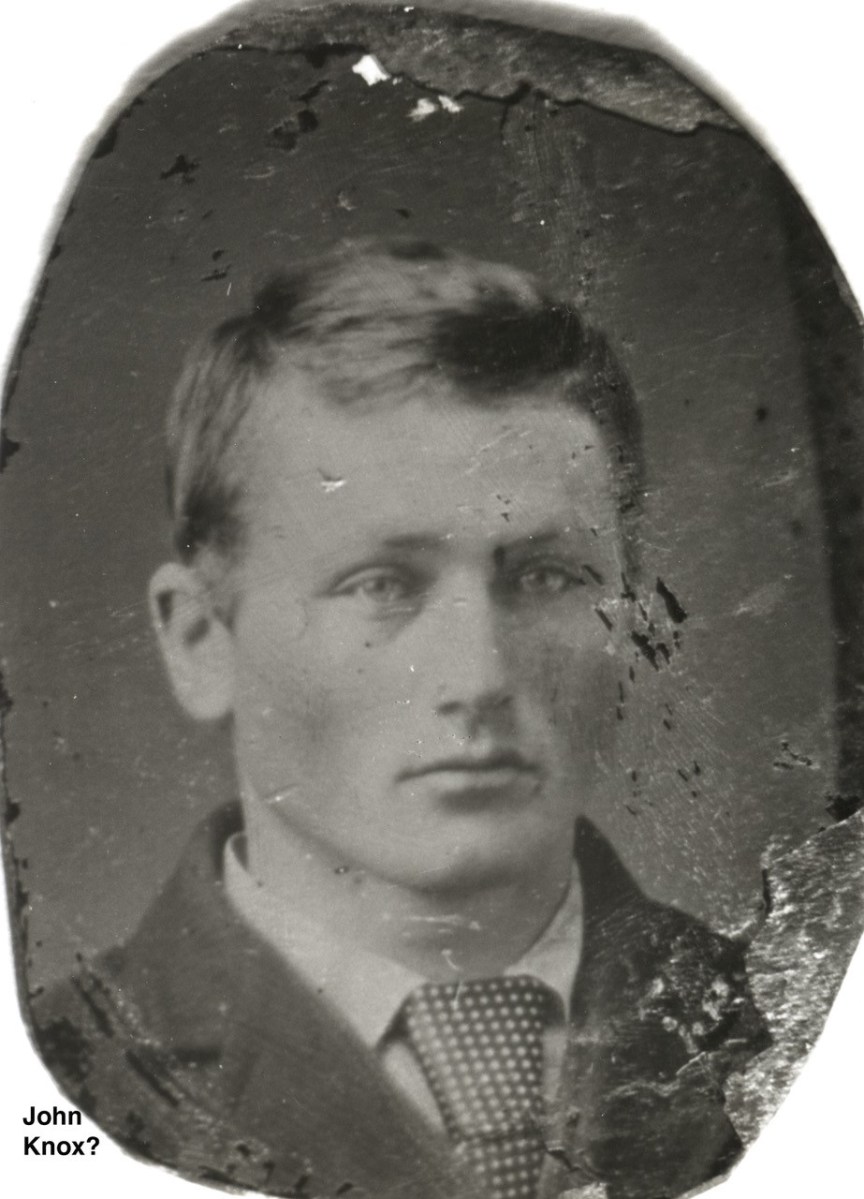
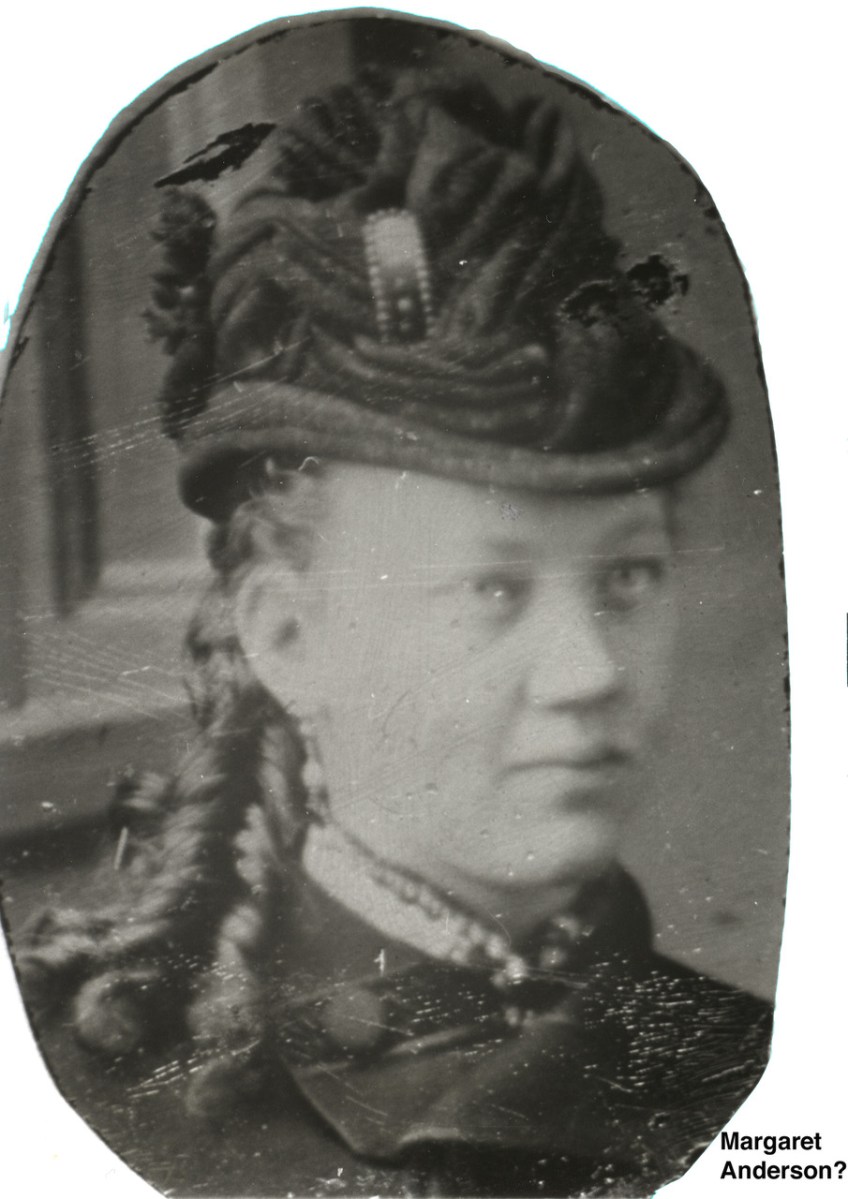
Around 1858, John Knox married Margaret Ann Anderson in Clarence, Ontario. The above photos are believed to be John and Margaret at the time of their marriage. John was the son of John Knox and Jane Anderson. Margaret was the daughter of George Anderson and Ann Graves.
Since Jane Anderson and George Anderson were siblings, John and Margaret shared a common set of grandparents: William Anderson and Isabella Marshall. The couple had six children,[xix] none of whom had identifiable genetic defects.
So good news for their descendants! Just to be thorough, I’ve checked myself over and have not discovered any webbed toes.
Risks, Benefits and New Research
Nowadays, science can predict late-onset risks based on family medical history and genetic testing. A number of disorders such as hypertension, coronary artery disease and cancer that affect our family members can have multiple root causes, including inheritance factors.
What genetic screening can do is identify “high susceptibility genes” which “play a significant role in the expression of a complex disease.” An example of this would be the mutated genes involved in hereditary breast and ovarian cancer (BRCA 1 and BRCA2).[xx] If these genes are rare and recessive, then consanguinity could be a contributing factor.[xxi]
As for me, while I likely do not have the hereditary breast and ovarian cancer genes (the cancer would surely have shown up by now), I’m not out of the woods. My doctor has told me that even with medication, exercise, and proper diet, I’m still at a higher risk than average for having a heart attack or stroke within the next few years. “Your genetics are against you,” was her encouraging comment.
Final Thoughts
I was perplexed when I first heard online comments following Tennessee’s 2024 law which made it illegal to marry one’s biological cousin. It never occurred to me that that such marriages might be seen as a social evil. My subsequent research has shown that the risks and benefits of consanguineous unions are now being scientifically investigated and analyzed.
While the subject of consanguinity is both socially and medically complex, such studies may benefit all of us in the future. As to the legality of such marriages, my hope is that restrictive laws will be enacted based on current scientific evidence and not outdated tropes or social conventions.
[i] Ancestry Team, https://blogs.ancestry.com/cm/9-famous-people-who-married-their-cousins/ (posted 9 Jul 2023, accessed 14 Apr 2024): Charles Darwin–Emma Wedgwood (had 10 children of whom 3 died in infancy), Albert Einstein–Elsa Einstein Lowenthal (Elsa was his first but also his second cousin), Saddam Hussein–Sajida Talfah (an arranged marriage), Jesse James–Zerilda “Zee” Mimms, Jerry Lee Lewis–Myra Williams (the bride was 13 years old), Edgar Allan Poe–Virginia Eliza Clemm (also a bride of 13 years), HG Wells–Isabel Mary Wells.
[ii] Rebekah Riess, “Tennessee legislature passes bill banning marriages between first cousins”, CNN, 12 Apr 2024 (https://www.cnn.com/2024/04/12/us/tennessee-first-cousin-marriage-bill/index.html; accessed 14 Apr 2024).
[iii] Jesse Dollemore, “CREEPY Republican Gives Floor Speech to Legalize COUSIN MARRIAGES!!!” (https://youtu.be/xuB61TvHzm4?si=BpCEy_ewMllc5VAM; accessed 14 Apr 2024). Dollemore’s main point was to deride the lawmaker for giving priority to the issue of cousin marriage while more pressing legislative issues needed attention.
[iv] “Charles V (1500–1558), Holy Roman Emperor,” painting by a Netherlandish Painter, ca 1520, Metropolitan Museum of Art, Accession Number 32.100.46 (donated to and accessed via Wikimedia Commons https://commons.wikimedia.org/wiki/File:Charles_V_(1500%E2%80%931558),_Holy_Roman_Emperor_MET_ep32.100.46.bw.R.jpg ; 03 May 2024).
[v] Juan Carreño de Miranda (1614-1685), “Charles II of Spain”, 17th century, Lázaro Galdiano Museum, public domain (accessed via Wikimedia Commons https://commons.wikimedia.org/wiki/File:Juan_Carreno_de_Miranda_041.jpg ; 05 May 2024)
[vi] G. Alvarez, F.C. Ceballos, C. Quinteiro, “The role of inbreeding in the extinction of a European royal dynasty,” PLoS One, 2009;4(4) ( https://pubmed.ncbi.nlm.nih.gov/19367331/ ; accessed 03 May 2024).
[vii] Lila Thulin, “The Distinctive ‘Habsburg Jaw’ was Likely the Result of the Royal Family’s Inbreeding,” The Smithsonian Magazine, 4 Dec. 2019 (https://www.smithsonianmag.com/smart-news/distinctive-habsburg-jaw-was-likely-result-royal-familys-inbreeding-180973688/ ; accessed 2 May 2024).
[viii] Thulin, “The Distinctive ‘Habsburg Jaw’”
[ix] Thulin, “The Distinctive ‘Habsburg Jaw’”
[x] Geneva Workshop, “Consanguineous marriages, pearls and perils: Geneva International Consanguinity Workshop Report,” Genetics in Medicine, Vol. 13, Number 9, Sep 2011, p. 842 (https://www.nature.com/articles/gim2011137 ; accessed 02 May 202).
[xi] Gabriel Andrade, “Is Cousin Marriage Dangerous?,” Skeptic, 24.2 23 Jul 2019. (https://www.skeptic.com/reading_room/incest-taboo-is-cousin-marriage-dangerous/ ; accessed 14 Apr 2024).
[xii] Geneva Workshop, “Consanguineous marriages, pearls and perils,” p. 842.
[xiii] A.H. Bittles, “The global prevalence of consanguinity, 2010,” (http://www.consang.net ; accessed 04 May 2024.
[xiv] Diane B. Paul, Hamish G. Spencer, “′It’s Ok, We’re Not Cousins by Blood′: The Cousin Marriage Controversy in Historical Perspective”, PLoS Biology 6(12):e320, 23 Dec 2008 (https://doi.org/10.1371/journal.pbio.0060320 ; accessed 14 Apr 2024).
[xv] Andrade, “Is Cousin Marriage Dangerous?”
[xvi] Andrade, “Is Cousin Marriage Dangerous?”
[xvii] Geneva Workshop, “Consanguineous marriages, pearls and perils,” p. 843.
[xviii] Geneva Workshop, “Consanguineous marriages, pearls and perils,” p. 846.
[xix] John and Margaret’s children were William Wallace (1859-1935), Arthur Milton (1860-1932), Emma Jane (1862-1914), John Alexander (1863-1937), George Whitfield (1866-1946), and Margaret Ann (1868-1941). On this genealogical branch, we have a “collapsed tree” where the number of linear ancestors is reduced. I’m fairly certain, but have not proved, that our Cole ancestors also have one couple who show up twice on our family tree, thereby reducing once again the number of linear ancestors.
[xx] [U.S.A.] Centers for Disease Control and Prevention, Hereditary Breast and Ovarian Cancer, “The BRCA1 and BRCA2 Genes”, reviewed 20 June 2023. (https://www.cdc.gov/genomics/disease/breast_ovarian_cancer/genes_hboc.htm#:~:text=The%20genes%20most%20commonly%20affected,the%20BRCA1%20and%20BRCA2%20genes ; accessed 4 May 2024)
[xxi] Geneva Workshop, “Consanguineous marriages, pearls and perils,” p. 845.
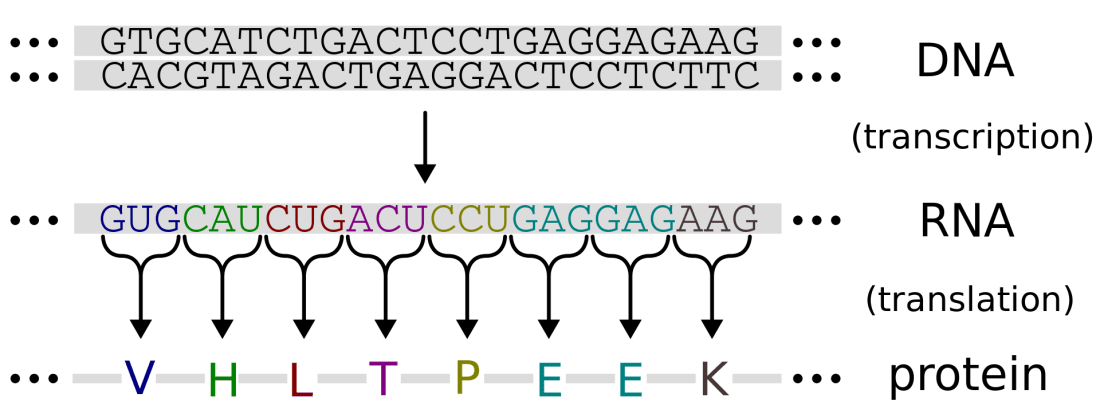
Note regarding the introductory image: Madeleine Price Ball (Madprime), CC0, via Wikimedia Commons, 6 May 2006, author, “Diagram of the central dogma, DNA to RNA to protein, illustrating the genetic code”. The author provides the following information: “This happens to be the first few amino acids for the alpha subunit of hemoglobin. The sixth amino acid here (glutamic acid, “E”) is mutated in sickle cell anemia versions of the molecule. The mRNA does have a “start codon” preceding this sequence, but I decided not to include it because that residue is later removed from the protein.” (https://upload.wikimedia.org/wikipedia/commons/thumb/3/37/Genetic_code.svg/580px-Genetic_code.svg.png?20230328040107 ; accessed 05 May 2024)

 Tatting the Family Threads...


Well done – as always
LikeLike
A treasure trove of information - to be digested at leisure!
LikeLiked by 1 person