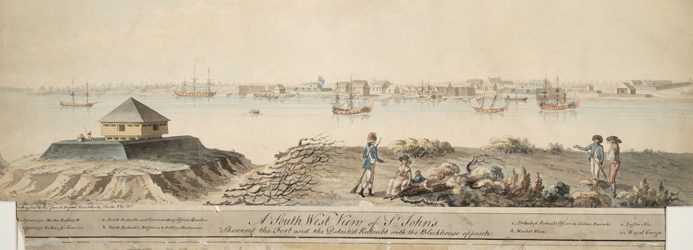
Military Preparations
Rumours of a planned invasion began to circulate in the summer of 1775. On June 27, the American Congress approved the invasion of Canada with the expectation of quickly capturing Montreal, Trois Rivières, and Quebec City, and forcing the British out of the province. On June 14, Congress had appointed George Washington as commander-in-chief of the newly minted “American continental army”. However, Brendan Morrissey in his book Quebec 1775: The American invasion of Canada explains:
In theory, all of the units in Canada were adopted by Congress, and so qualify as “Continentals”—the equivalent of British Regulars. However, even as late as 1776, a standing army was still anathema to many politicians and units were considered to be on loan to Congress. Thus, political control remained with “the people” through the colonial legislatures. The force that entered Canada was known as the “Separate Army” until the end of 1775, and thereafter as the “Northern Army”.[ii]
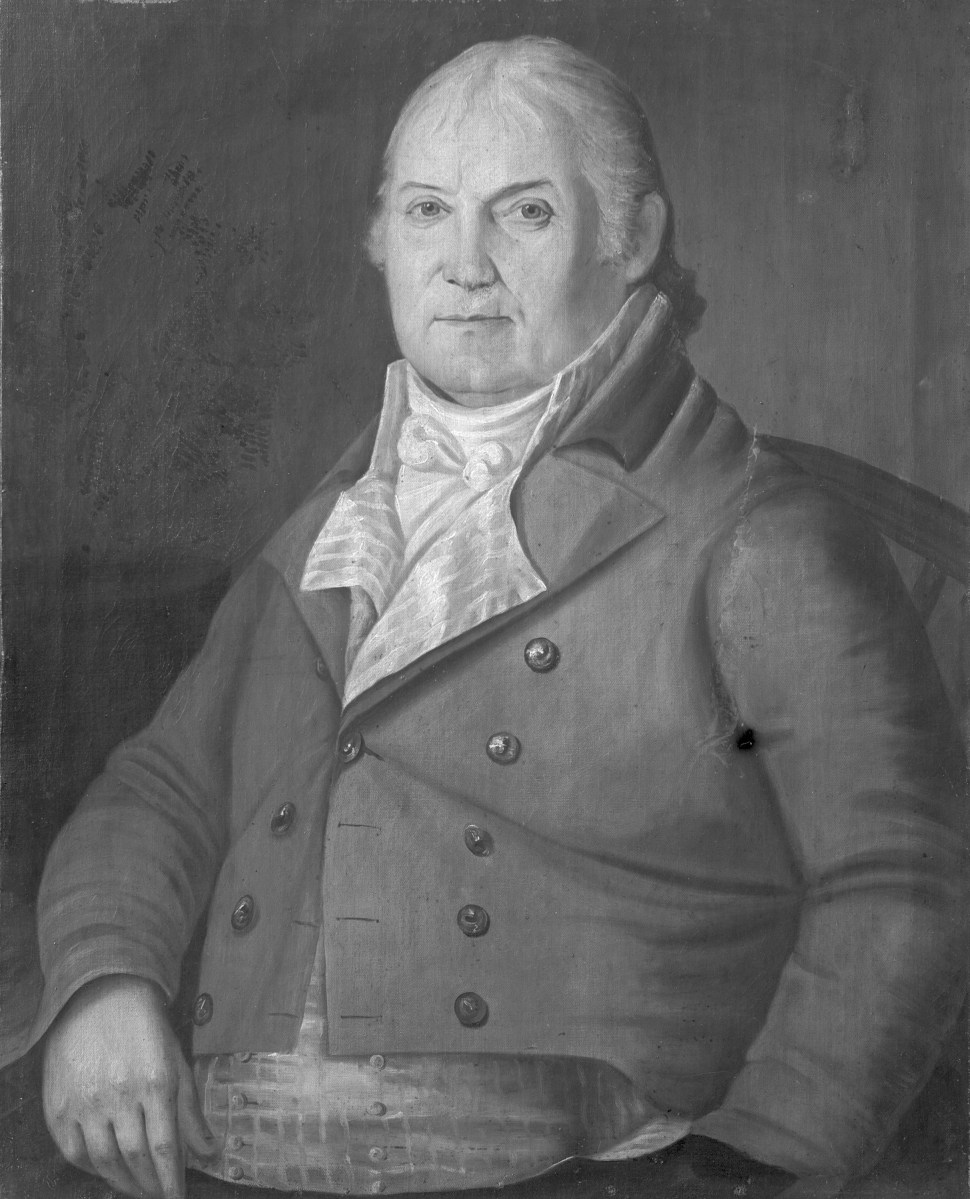
The Separate Army was put under the command of Philip Schuyler, a native of New York and a veteran of the Seven Years’ War. Schuyler’s remit was “to drive back and capture all British garrisons along Lake Champlain and the Richelieu River. Afterwards, they were to take Montreal and head down the St. Lawrence River to Quebec. There they were to capture the citadel at Quebec, a critical supply line for all of Canada.”[iii]
John Platt’s Second Career—Loyalist Spy
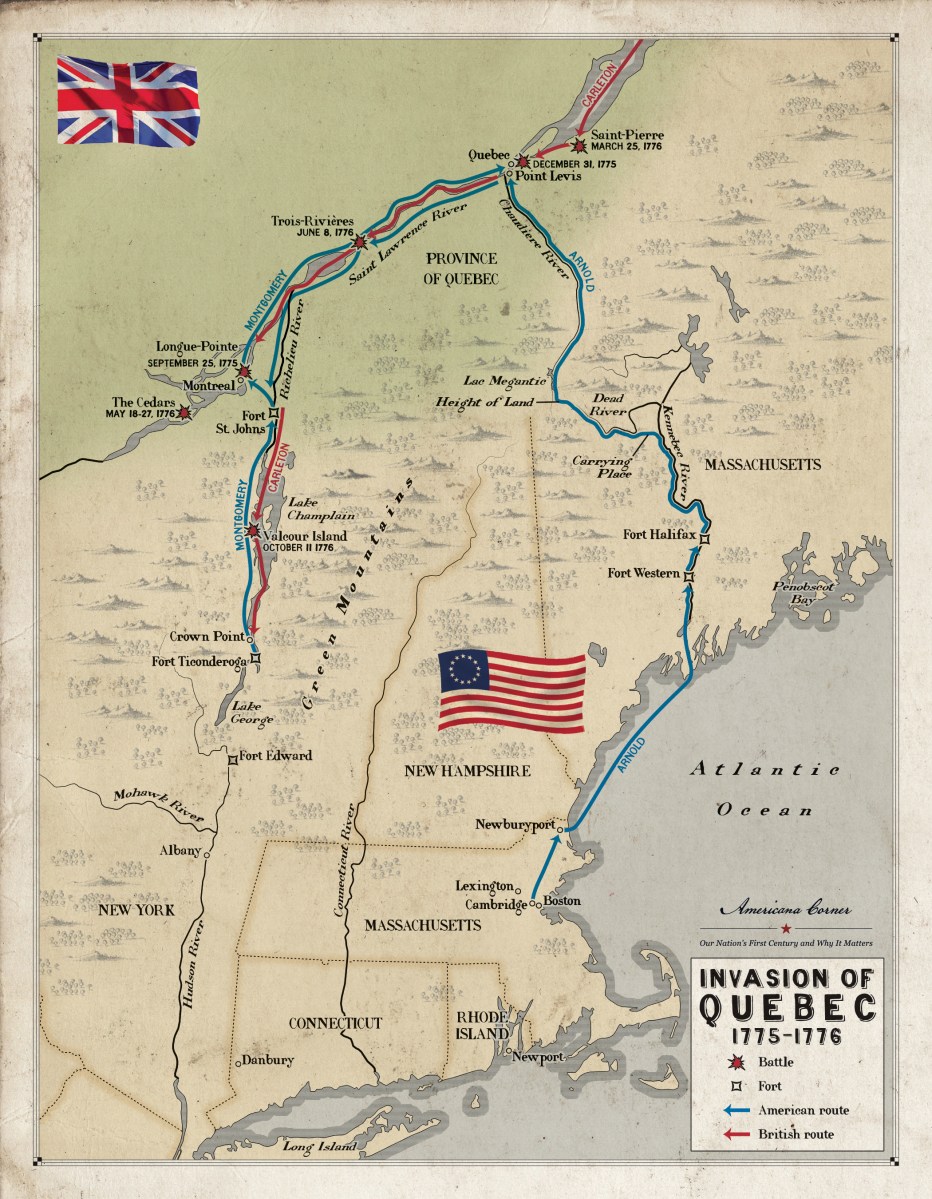
In Saratoga County, New York, Richard Wragg and John Platt were both in business as blacksmiths, an occupation well-suited to hear the gossip from a constant flow of travellers. Both men were loyal to the British Crown. In his memorial, that is, his petition for land, Wragg wrote:
…he [Wragg] observed with great detestation the proceedings of the Rebels in his Neighbourhood, in consequence of which, Memorialist prevailed upon his Son in Law John Platt to set off for Canada; in order to inform His Excellency the Governor of the preparations then making by the Rebels for an Expedition against that Province.[v]
John Platt was about 25 or 30 years old when hostilities began. He was married to Wragg’s eldest daughter Ann. Together, the couple had one son, George, who was about a year old. Nevertheless, Platt agreed to travel north and gather information on the Continental army movements. He left his home sometime in July and travelled first to Fort George.[vi]
The Northern Forts
In May, American forces under Ethan Allen and his Green Mountain Boys, as well as Benedict Arnold, captured Fort Ticonderoga and Crown Point in New York, although without congressional approval. Fort George had also been “captured” by a small American force. The fort, which was at that time in poor condition, was guarded by Captain John Nordberg, a 65 year-old Swedish national and retired British officer who lived in a small cottage close to the fort itself. When the Americans arrived and demanded his surrender, he simply handed over the keys.[viii]
In a diary entry, Major Henry Livingston of the 3rd New York Continental Line described his impressions of Fort George on September 27:
There is but 1 house between [Abraham] Wings & Fort George. The soil most part of the way very poor & cover’d with Pitch pines, till we come within 3 miles of the Lake where High hills prevail & rocky cover’d with white oak & Chestnut Trees. Fort George is built on an Eminence 300 yards south of Lake George, is much out of repair altho still defensible, being built mostly of stone. It lies near a quarter of a mile E. from the ruins of Fort William Henry. There is near 3 or 400 acres of cleared land abt the fort & a few wretched Hovels that were formerly used as Barracks.[ix]
As the war began, new importance was paid to the role of the northern forts. Fort George became an important hub for communications, as well as the movement of supplies and troops. During the 1776 winter, Schuyler used the site to build bateaus designed to ferry men and supplies.
Platt wrote that he spent some time in Fort George gathering information on the American troops before travelling across Lake George to Fort Ticonderoga. He may have arrived at Ticonderoga sometime between the beginning and middle of August.
Chaos in the New American Army
Major General Philip Schuyler, commander of the Northern Department, reached Ticonderoga on July 18. As a military officer, he had definite views on military discipline. His first impression of the troops stationed at Fort Ticonderoga was poor, to say the least. He wrote to his friend George Clinton:
On Monday night about Eleven I arrived at the Landing place at the north End of Lake George, (the place where Every necessary for the army must be landed and transferd a post of Importance, as such I had ordered it to be guarded by as many men as could find Shelter and pointedly urged, in orders which I sent from Albany, the necessity of vigilance, a Centinal hailed the boat and on being informed that I was In It, he quitted his post to go and awake the guard who were all so closely embraced in the downy arms of sleep that he had no success….I then marched up with my Aid De Camp and came to a barn which contained a serjeants guard the man serj Centinal at the door challenged but suffered me to come up to him, this guard equally with the first felt the power of the God of sleep, as did Indeed the whole party consisting of one hundred men, and I am Confident that I might have run my Bayonet into every man of both guards, set fire to the Block house which contained the party where there was no Centinal, destroyed a large boat that was building, and all the stores and provisions; the like Inattention had reigned in this place in so much that some of their own officers declared that an hundred men might have surprized & Cut of the garrisons….[x]
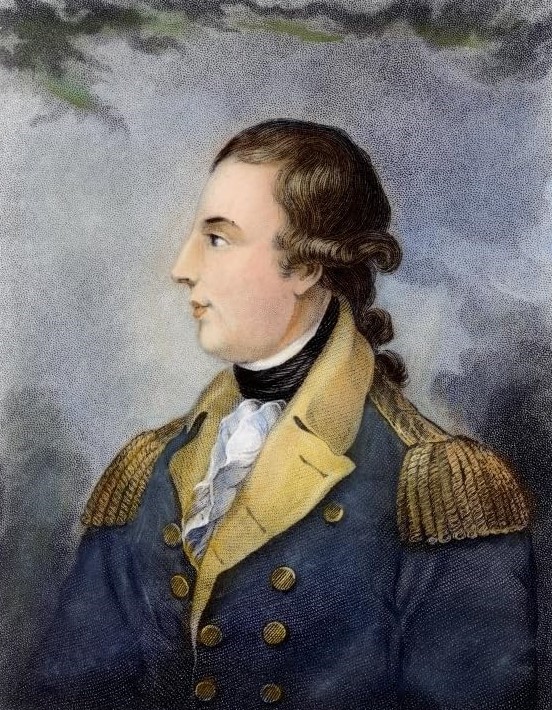
Schuyler’s second, Brigadier General Richard Montgomery, was also from New York, but unlike his superior, Montgomery seems to have gained the confidence and trust of the men he commanded. Montgomery likely arrived in Ticonderoga around the same time as Schuyler. Both men were hard-pressed to prepare for the planned invasion. Further delays resulted from Schuyler’s debilitating episodes of what he called “a billious Fever”[xi]. On those occasions he passed command to Montgomery.
Fort St-Jean becomes the Next American Target
Meanwhile, our erstwhile loyalist, John Platt, was on the move. He wrote in his 1780 memorial:
Your memorlst … proceeded over Lake George to Ticonderoga where General Montgomery than lay and got an exact account of the whole of their Route towards Canada, from thence he proceeded to Crownpoint, and exactly traced their movements, keeping company with the Rebel Officers, and spending his money freely amongst them, by which he obtained a pass from Major Elmore, for [unable to decipher] River, and was under the necessity of hyring a man and a boat at the rate of two Schillings each day, from Crownpoint, down to St.Johns, where your Memorialist gave in his inteligence to Major Preston three weeks before the approach of the Rebel Army. [xiv]
On August 18, Montgomery wrote to James Livingston, a distant relative by marriage and an American sympathizer living in Chambly, Quebec:
Tho I am so unfortunate as not yet to have received your letter, addressed to General Schuyler, I am thereby in all probability deprived of much important intelligence; I have nevertheless gathered sufficient information to make me very anxious in relieving you from your suspence. It is with this view I now give you assurance, we are preparing with the utmost expedition to pass the Lake & that, in all probability, the troops destined for this service will be at St Johns in 14 days from hence. Want of boats, & other difficulties have rendered it impracticable hither to stir from hence. They are now in some measure surmounted, & we are on the eve of making a generous effort to relieve our brethren of Canada from the galling yoke which now oppresses them.
PS General Schuyler’s absence for a few days has thrown the Command into my hands, & given me the opportunity of doing me this honor.[xv]
The British Prepare
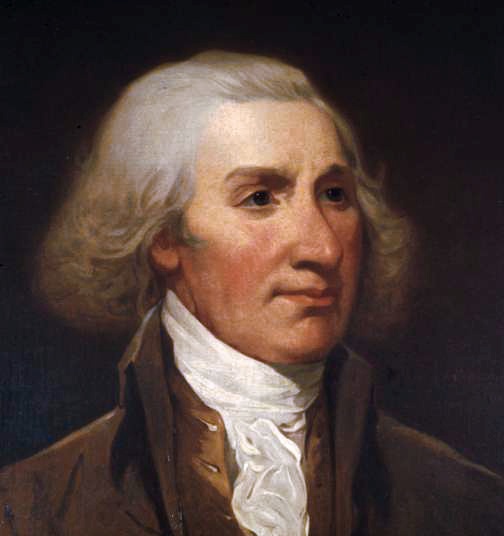
Platt’s information provided the commander of Fort St-Jean with several weeks to prepare for the arrival of the enemy forces. The Fort was commanded by Major Charles Preston “who was commissioned lieutenant in the 26th Regiment [of Foot] in 1753, captain in 1759, and major in 1768. He commanded St. John during its siege by the Continental Army in 1775. His subordinate, John André … later conducted negotiations with Benedict Arnold, was captured and hanged as a spy”.[xvi] Inside the fort were a total of about 500 British regulars and a few Canadian militia. About 40 women and as many children were also living in the Fort.[xvii]
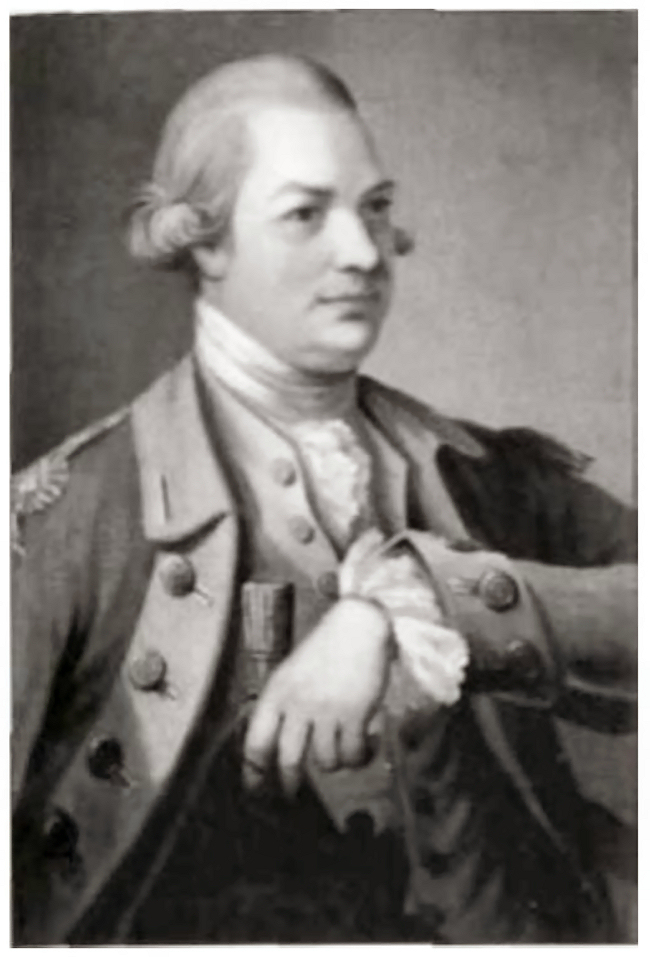
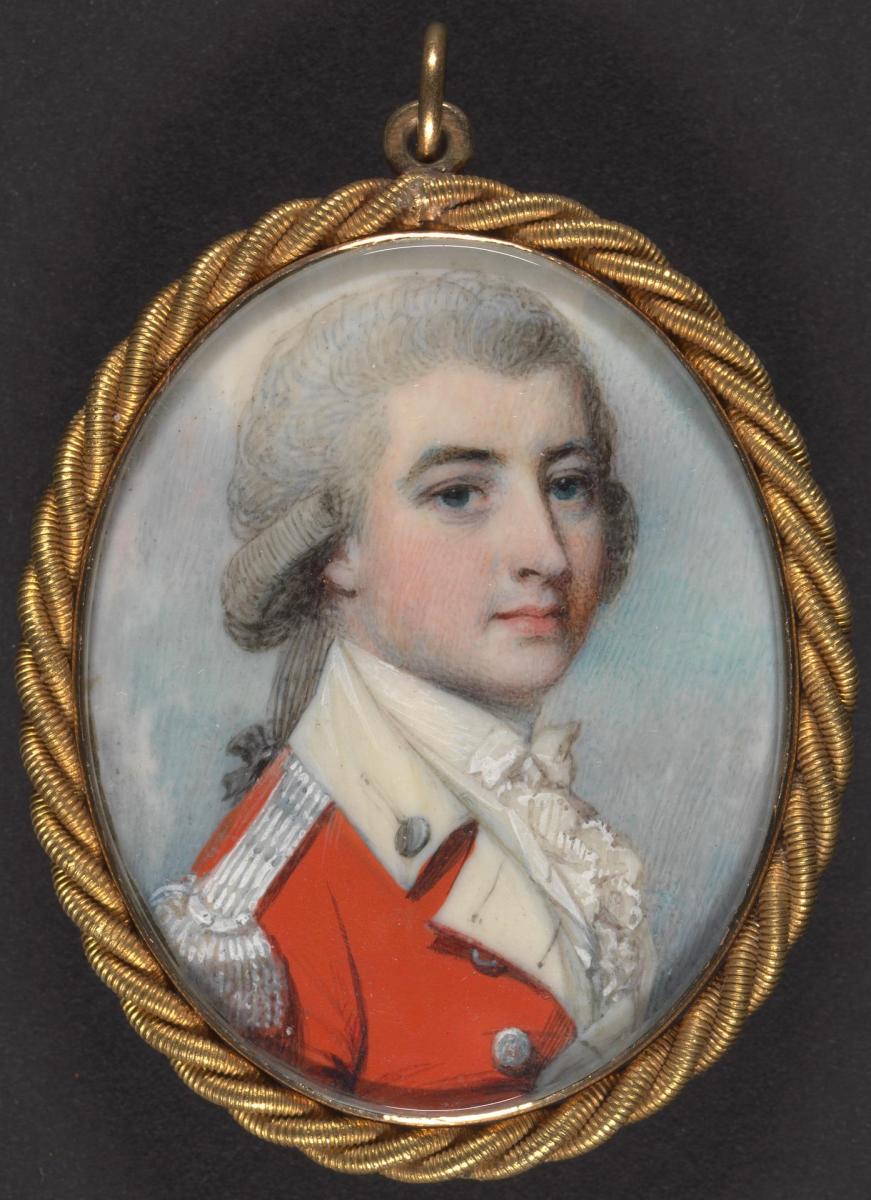
Preston ordered two redouts (temporary fortifications outside the fort originally built by the French) to be rebuilt during July. These were linked to the main fort with a palisaded trench, which was fronted with a seven-foot ditch on all sides but the one facing the river.[xx]
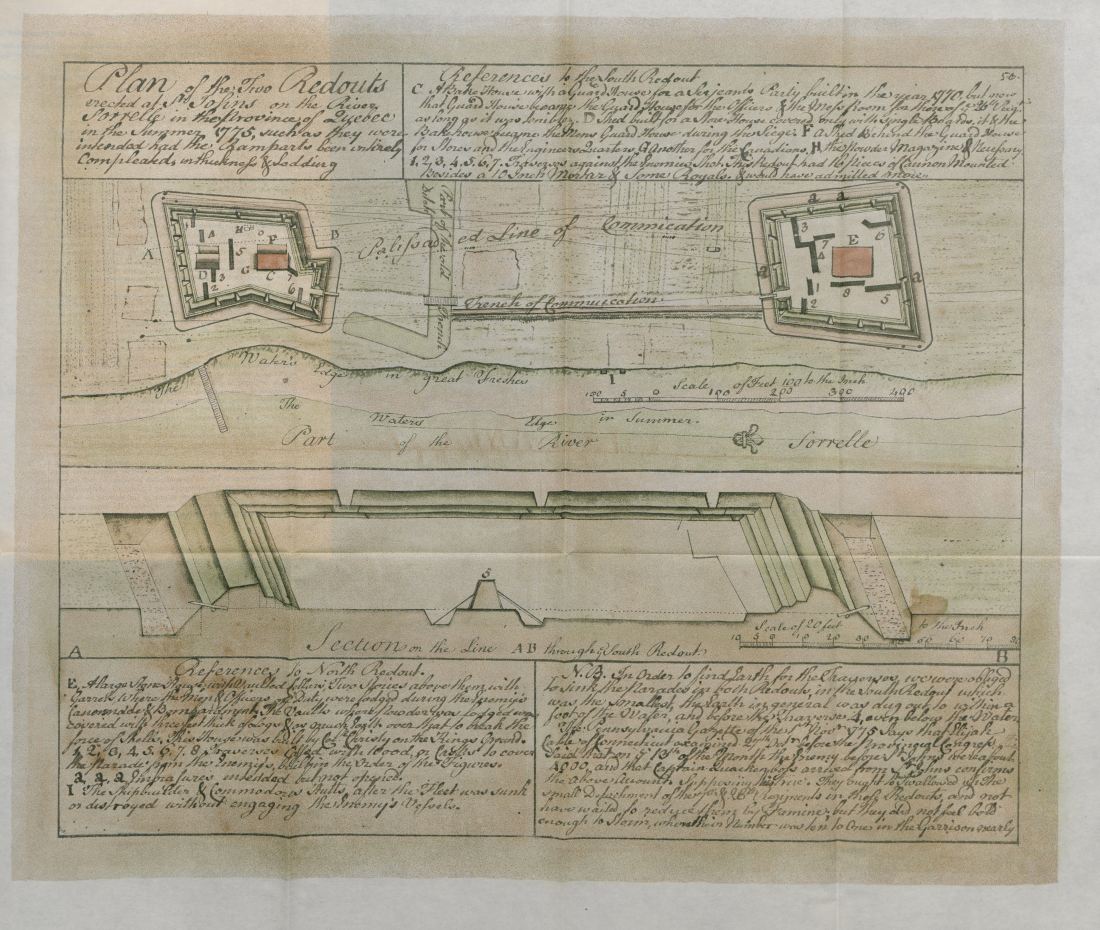
In addition, prior to the Americans’ arrival, Preston’s gunners levelled the few buildings surrounding the fort which gave the British a clear line of fire.
The Americans March on Canada
Montgomery left Ticonderoga on August 28 and arrived at Île-aux-noix on September 3. General Schuyler joined the army two days later. The Americans had about 1,900 men but only 1,000 were fit for action. Of these, many were inexperienced and undisciplined recruits.
Two attempts to besiege Fort St-Jean failed, the first on September 5-6 and the second on September 10-11. On September 13, General Schuyler again fell ill. He handed over permanent command to Montgomery on the 16th, and returned to Ticonderoga to recover.
Montgomery arrived at St-Jean on September 16 to begin a formal siege. At first, the Americans made little progress in building batteries to be used against the British defenses. This did not last.
The Tide Turns
By mid-October, a large mortar nicknamed “the sow” arrived from Fort Ticonderoga. The two buildings in the fort which had provided shelter were destroyed and everyone within the garrison was forced to sleep in the cellars. Throughout the siege, Lieutenant André kept a journal, likely at the order of Major Preston. André’s journal laid out the details of the worsening situation within the fort: [xxii]
[October 15] The Weather grew very cold, and as the Windows of the house were all broke; As many as cou’d find room in the Cellars slept there, The rest unable either to get a place or to bear the heat and disagreeable smell arising from such numbers being crowded together slept above in cold and danger or walk’d about the greatest part of the night. Towards Evening we were again saluted with shells; and the night being cold and wet, it was thought proper to rouse us at Midnight with a few Shells and Shot….
[October 16] Our Rum, Wine &ca were exhausted. Salt Pork was our daily fare, with sometimes a few roots, and we reduced ourselves about this time to 2/3 of the usual Allowance…. The Situation of the Sick and wounded was a very cruel one. They were neither out of the reach of danger, nor were they shelter’d from the Inclemency of the Weather, or provided with any of those things which might alleviate their Sufferings; One or two were hurt in their births….
[October 20] Two men appear’d at the edge of the Wood to the N. of the redoubts with a flag of Truce. They were brought in blindfolded. One was the drum Major of the R.F. [Regiment of Foot]. This was to inform us that [Fort] Chambli had surrender’d and to request leave for Batteaux to pass the Forts with the Prisoners and their Baggage….
[November 1] Towards night the Enemy beat a parley, Their Messenger was receiv’d and he brought the following letter from Mr Montgommery. The Messenger was a hair dresser of Montreal who had been taken prisoner at Longeuil. He told us of Genl Carletons not having been able to effect a landing there….
The Officers were assembled. Majr Preston inform’d them that there was at 2/3 rations, pork and flour for 8 days, from this was to be deducted the damages of the day before….
There was now nothing left, but to frame the best Articles [of surrender] We cou’d for the Garrison.
The information about Chambly had been intentionally conveyed by letter to Preston. Montgomery wrote following the surrender of the garrison at Chambly: “One of the above mentioned prisoners I sent into the fort, to inform Major Preston of the circumstances of the action, that he might judge what prospect he could have of relief. It had the desired effect. The garrison having been on half allowance for some time.”[xxiii]
Surrender
For the next two days, terms were negotiated. Preston demanded a clause be removed expressing Montgomery’s regret that the garrison’s bravery had not been applied “in a better cause”. Preston wrote that the words were to be excised entirely and added “the Garrison being determined rather to die with their arms in their Hands, than submit to the Indignity of such a reflection”.[xxiv] Montgomery acceded to Preston’s demand.
On November 3, 1775, sixty days after the first attack of September 5, the garrison marched out with the honours of war. Fort St-Jean had fallen.
© Bette Smith 2026
[i] James Peachy, “Fort Saint-Jean” 1790 watercolor, pen and ink, painting depicting the fort around the time of the 1775 siege, from the Original View taken by J. Hunter. R. Regt. Arty. The ship in the foreground is the HMS Royal George (Wikimedia Commons contributors, “File:FortStJeanPeachey1790.jpg,” Wikimedia Commons, https://commons.wikimedia.org/w/index.php?title=File:FortStJeanPeachey1790.jpg&oldid=779774696 : accessed June 20, 2026).
[ii] Brendan Morrissey, Quebec 1775: The American invasion of Canada (Osprey Publishing, 2003) 24.
[iii] Harry Schenawolf, “Canada Invasion in 1775: General Richard Montgomery”, Revolutionary War Journal, posted 21 Jul 2021 (https://revolutionarywarjournal.com/general-richard-montgomery-cried-a-new-nations-defiance-drew-his-sword-and-charged-the-cannon/ : accessed 14 Jun 2026).
[iv] Map, “Invasion of Quebec” courtesy of Americana Corner (http://www.americanacorner.com/ : accessed 20 Jun 2026).
[v] Library-Archives Canada (LAC), “Land Petitions of Lower Canada, 1764-1841,” RG 1 L3L, Vol. 207, pages 96985-96988, digital images 17-20, Memorial Richard Wragg, Montreal, 26 Nov. 1795. I downloaded a copy of this file from LAC in 2009. When I returned to the LAC website, I was unable to locate the file. LAC is revamping its website and appears to be moving many of their digital images to Canadiana Héritage. It may be there but I cannot find it.
[vi] LAC, “Haldimand Papers: Memorials from the Provincial Corps and Loyalists, n.d. 1777-1781”, MG 21, Add Mss 21874 (Vol B-214), Memorial of John Platt, a Loyalist, 17 Jun 1781 in Canadiana Héritage, Haldimand Papers H-1743, digital images 1138-1142 (https://n2t.net/ark:/69429/m0n872v2d21m : accessed 05 Jun 2026).
[vii] Wm Notman and Sons, “John Platt, painting, photographed for Mr. Adam Skaife in 1903”,Gelatin Silver on glass negative, Collection McCord Stewart Museum, Object Number II-144631, in pubic domain (https://collections.musee-mccord-stewart.ca/en/objects/105417/john-platt-peinture-photographiee-pour-m-adam-skaife-en-1?ctx=e569d70c6aba1e591ad95dce9d77096538d96e6f&idx=11 : accessed 20 Jun 2026). The original painting was likely commissioned around 1800, so 25 years after John’s adventures in 1775.
[viii] Fort Ticonderoga, 250th Collections, On This Date, “Fort George: From Dilapidated Bastion to Rejuvenated Military Post”, 16 Sep 2025 (https://fortticonderoga.org/news/fort-george-from-dilapidated-bastion-to-rejuvenated-military-post/ : accessed 20 Jun 2026).
[ix] Henry Livingston and Gaillard Hunt, “Journal of Major Henry Livingston, of the Third New York Continental Line, August to December, 1775”, The Pennsylvania Magazine of History and Biography, 1898, Vol. 22, No. 1 (1898) 12 (University of Pennsylvania Press, digitized in collaboration with jstor.org (https://www.jstor.org/stable/pdf/20085778.pdf : accessed 20 Jun 2026).
[x] “Letter from General Philip Schuyler to George Clinton, 24 Jul 1775”, Transcription, Fort Ticonderoga Manuscript Collection Object ID 2000.0034.002. (https://fortticonderoga.catalogaccess.com/archives/29404 : accessed 20 Jun 2026).
[xi] Fort Ticonderoga, 250th Collections, On This Date, “‘My disorders are inflexibly stubborn’: Philip Schuyler Solders on through Sickness” (https://fortticonderoga.org/news/my-disorders-are-inflexibly-stubborn-philip-schuyler-soldiers-on-through-sickness) and “Letter from General Philip Schuyler to Jacob Cuyler, 14 Oct 1775”, Transcription, Fort Ticonderoga Manuscript Collection Object ID MS.1938 (https://fortticonderoga.catalogaccess.com/archives/29975 : accessed 20 Jun 2026).
[xii] Jacob H. Lazarus, “Philip John Schuyler (1733-1804)”, 1881 mirror copy image from a miniature painted by John Trumbull . Painting is on display at the Schuyler Mansion State Historic Site, Albany. (https://commons.wikimedia.org/wiki/File:Schuyler.jpg : accessed 17 Jun 2026).
[xiii] E. Mackenzie (first full name unknown), “Richard Montgomery”, engraving based on painting by Charles Willson Peale, ca 1839; Wikimedia Commons contributors, “File:Richard Montgomery Colored Engraving.jpg,” Wikimedia Commons (https://commons.wikimedia.org/w/index.php?title=File:Richard_Montgomery_Colored_Engraving.jpg&oldid=1130501189 : accessed June 20, 2026).
[xiv] LAC, “Memorial of John Platt, a Loyalist, 17 Jun 1781”; Major Samuel Elmore was indeed stationed at both Ticonderoga and Crown Point in 1775 (https://www.findagrave.com/memorial/14296703/samuel-elmore). Platt must truly have had the gift of the gab in order to induce Elmore to provide him with a military pass.
[xv] Richard Montgomery, “Letter to James Livingston”, Military Papers 1775-1779, Item b49 f64 in
Philip Schuyler papers, Manuscripts and Archives Division, The New York Public Library (https://archives.nypl.org/mss/2701#c1381393 : accessed 13 Jun 2026).
[xvi] LAC, Charles Preston fonds, 1775-1776, textual record, item number 104672 (https://central.bac-lac.gc.ca/.redirect?app=fonandcol&id=104672&lang=eng : accessed 21 Jun 2026).
[xvii] LAC, “Report of the work of the Public Archives for the years 1914 and 1915”, Appendix B, Ottawa, 1916, transcribed journal of the 1775 siege of Fort St-Jean attributed to John André. Canadiana (https://n2t.net/ark:/69429/m0tt4fn11x7j : digital image 44 accessed 21 Jun 2026.
[xviii] “Major Charles Preston”, portrait, Scottish National Portrait Gallery B-8855 (Wikimedia Commons contributors, “File:Major Charles Preston.jpg,” Wikimedia Commons, https://commons.wikimedia.org/w/index.php?title=File:Major_Charles_Preston.jpg&oldid=1181420047 : accessed June 21, 2026).
[xix] George Engleheart, “Major André”, miniature painting, between 1771-1780, Gouache and watercolor on ivory, in collection of Yale Center for British Art, Accession Number B1974.2.33 , Wikimedia Commons contributors, “File:George Engleheart – Major André – B1974.2.33 – Yale Center for British Art.jpg,” Wikimedia Commons, (https://commons.wikimedia.org/w/index.php?title=File:George_Engleheart_-_Major_Andr%C3%A9_-_B1974.2.33_-_Yale_Center_for_British_Art.jpg&oldid=1100722237 : accessed June 21, 2026).
[xx] Morrissey,32.
[xxi] LAC, “Report” depicting the plan of the 1775 Redoubts at Fort St-Jean. Canadiana (https://n2t.net/ark:/69429/m0tt4fn11x7j : digital image 45 accessed 21 Jun 2026).
[xxii] LAC, “Report” Canadiana (https://n2t.net/ark:/69429/m0tt4fn11x7j : digital images 44-52 accessed 21 Jun 2026).
[xxiii] Library of Congress, “Extract of a Letter from General Montgomery, dated camp before St. John’s, October 20, 1775” (https://tile.loc.gov/storage-services/service/rbc/bdsdcc/00601/00601.pdf : accessed 20 Jun 2026).
[xxiv] LAC, “Report” transcribed terms of capitulation negotiated for the surrender of Fort St-Jean. Canadiana (https://n2t.net/ark:/69429/m0tt4fn11x7j : digital images 41-43 accessed 21 Jun 2026).


